Blog & News

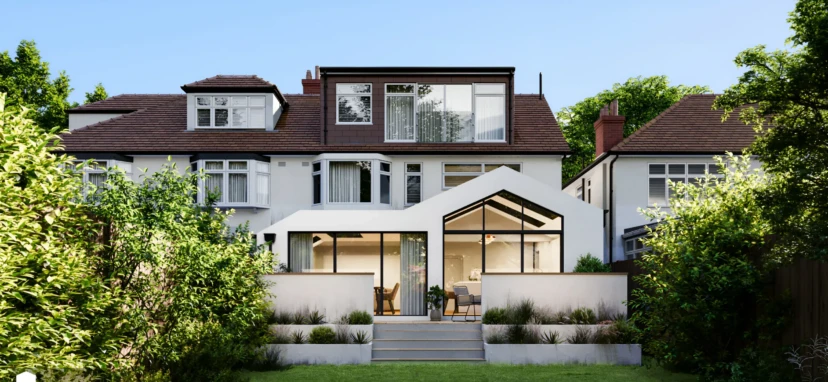
Planning a House Extension in Kensington & Chelsea in 2026

Getting planning permission for a house extension in the Royal Borough of Kensington and Chelsea (RBKC) is achievable — but it is more complex than most London boroughs. The key factor is conservation area coverage: around 72% of the borough sits within a designated conservation area, which removes most Permitted Development rights and puts design quality under much closer scrutiny. If you are planning an extension here, expect a full planning application to be the default route, not the exception.

How to Transform Your South London Victorian Terrace With a Loft Conversion

Yes, a loft conversion is usually one of the most practical ways to add space and value to a South London Victorian terrace, because these homes often have steep pitched roofs, generous loft voids and a rear outrigger that can support an L shaped dormer design. The key determinant is whether the proposal fits within permitted development rules, conservation area controls and good design expectations. For many homeowners in Clapham, Tooting, Balham, Brixton, Dulwich, Wimbledon, Peckham and surrounding South London neighbourhoods, the loft is the most underused part of the house. A well planned conversion can create a main bedroom suite, home office, children’s floor or guest space without losing garden area or moving away from a settled location.

Article 4 HMO: What It Means for Property Owners

If your property is located within an Article 4 Direction area, transforming it into a House in Multiple Occupation (HMO) requires full planning permission; it is no longer covered under permitted development rights. This necessity introduces additional costs, time, and uncertainty to a conversion that would otherwise be simple. However, we are experts in HMO conversions within Article 4 Areas and can use our specialisation to significantly streamline this process for you.

Do I Need a HMO Licence in the UK?

Key Insights at a GlanceA property is classed as an HMO when 3 or more unrelated tenants share facilities such as a kitchen, bathroom, or toilet.Mandatory HMO licensing applies nationally to properties with 5 or more tenants from more than one household.Properties with 3 or 4 tenants may still need a licence under additional licensing schemes operated by some local councils.2 tenants living together do not meet the HMO definition no licence is required in that case.Operating an unlicensed HMO can result in fines of up to ...
Img Nikki2

Nikki

Architectural Sales Consultant

Tell us about your plan and we'll send you a free quote! It takes less than 60 seconds!

Step 1 of 5


Book a free video meeting