Article 4 HMO: What It Means for Property Owners
If your property is located within an Article 4 Direction area, transforming it into a House in Multiple Occupation (HMO) requires full planning permission; it is no longer covered under permitted development rights. This necessity introduces additional costs, time, and uncertainty to a conversion that would otherwise be simple. However, we are experts in HMO conversions within Article 4 Areas and can use our specialisation to significantly streamline this process for you.
Key Insights at a Glance
- Article 4 Directions remove permitted development rights. In designated areas, converting a dwelling (Use Class C3) to a small HMO (Use Class C4) requires a formal planning application.
- Not all areas are affected. Article 4 Directions for HMOs are applied locally by councils, typically in high demand or student heavy neighbourhoods.
- Planning permission is not guaranteed. Councils can refuse if the proposal would cause an over concentration of HMOs, harm neighbourhood character, or reduce family housing stock.
- Existing lawful HMOs are not affected. If your property was already operating as an HMO before an Article 4 Direction came into force, your use is likely protected.
- Large HMOs (7 or more bedrooms) always need planning permission. Article 4 only matters for smaller HMOs (up to 6 occupants) that would otherwise fall under permitted development.
- Councils must give 12 months notice before most Article 4 Directions take effect (except in urgent cases), so timing matters.
- Professional advice early saves cost. Instructing a planning consultant or architect before purchase or conversion reduces the risk of refusal.
What Is an Article 4 Direction for HMO?
An Article 4 Direction is a legal mechanism under the Town and Country Planning (General Permitted Development) (England) Order 2015 that allows a local planning authority (LPA) to withdraw specific permitted development rights in a defined area.
In the context of HMOs, this specifically targets the permitted development right under Class L, which normally allows a C3 dwelling house to change use to a C4 HMO (a small HMO of up to 6 unrelated occupants) without planning permission.
Once an Article 4 Direction is in place, that automatic right is removed. Landlords and investors must instead submit a full planning application and demonstrate that the conversion meets local planning policy.
It is important to understand that Article 4 Directions do not ban HMOs. They simply bring the change of use within the planning system, giving the council control over where and how HMOs are permitted.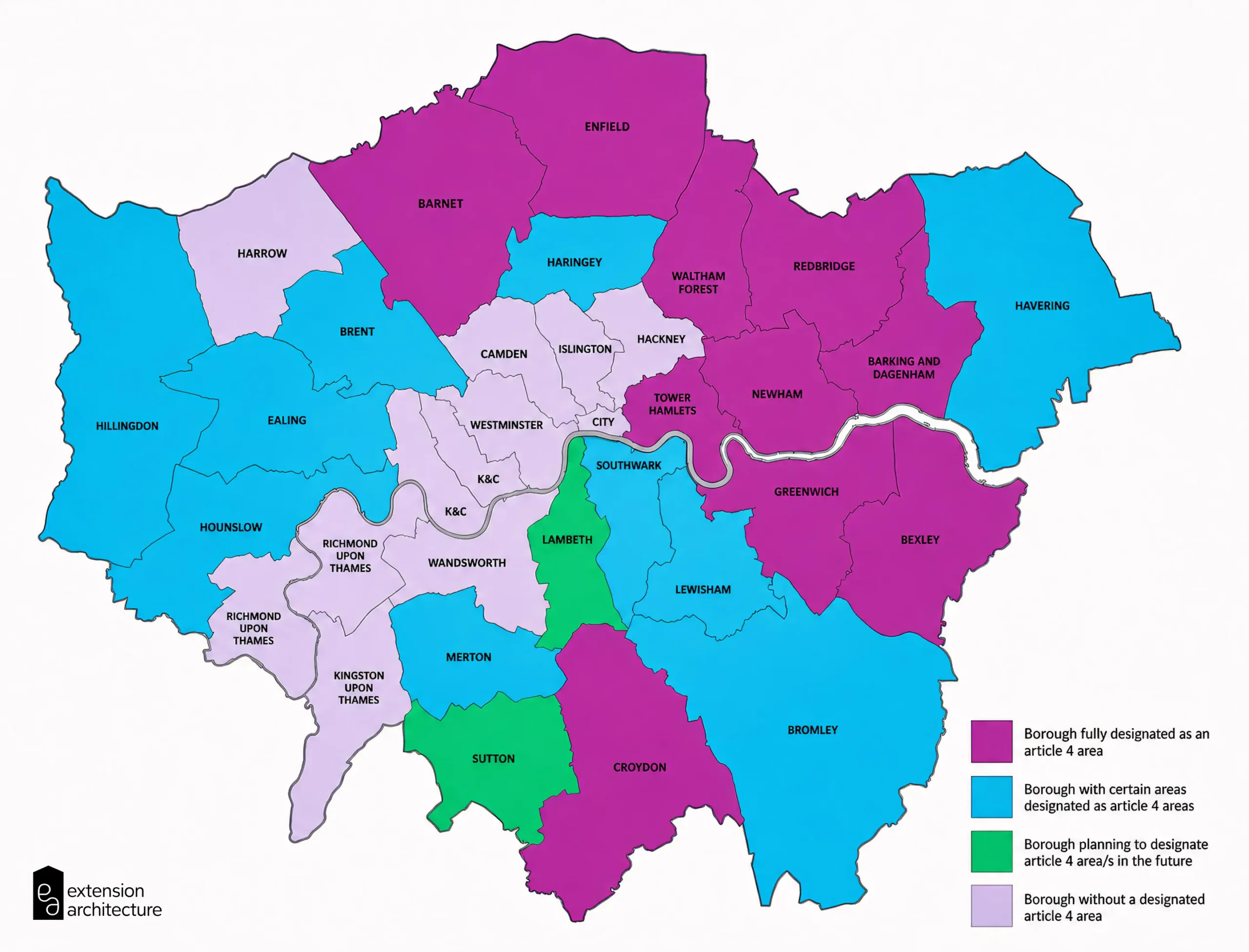
How Article 4 Affects HMO Planning Permission
Before Article 4
Without an Article 4 Direction in place, converting a standard family home (C3) to a small HMO (C4) is permitted development. No planning application is needed, provided the property does not exceed six occupants.
After Article 4
Once an Article 4 Direction is in force, the same conversion triggers a requirement for planning permission. The council will assess your application against:
- Local HMO policies. Many councils have adopted thresholds limiting the percentage of HMOs on any given street or within a defined radius.
- The National Planning Policy Framework (NPPF). Particularly policies on sustainable communities and housing mix.
- Local Plan policies. These vary by authority but often address housing balance, parking, and amenity.
- Supplementary Planning Documents (SPDs). Some councils have specific HMO SPDs with detailed requirements on room sizes, communal facilities, and bin storage.
Refusal is a real risk, especially where the council’s evidence base shows an over concentration of HMOs already exists.
Larger HMOs
Properties with seven or more occupants fall under sui generis use, a category of their own. These always require planning permission regardless of whether an Article 4 Direction is in place.
Why Councils Introduce Article 4 Directions for HMOs
Councils typically introduce Article 4 Directions where the concentration of HMOs has grown to a level that is causing, or risks causing, harm to the character and function of residential neighbourhoods.
Common concerns include:
- Loss of family housing. A reduction in the supply of larger family homes as C3 properties are converted to C4 HMOs.
- Over concentration effects. High densities of HMOs in a single street or ward can affect neighbourhood cohesion, increase pressure on parking, and alter the social balance of an area.
- Student heavy areas. University towns such as Leeds, Nottingham, and Bristol introduced Article 4 Directions specifically to manage the spread of student accommodation into predominantly family residential areas.
- Amenity impacts. Increased refuse generation, noise, and transient occupation patterns can affect neighbouring residents.
The Planning Practice Guidance (PPG) confirms that Article 4 Directions should be used sparingly and be evidenced. Councils cannot simply apply them borough wide without justification.
Areas in the UK with Article 4 HMO Restrictions
Article 4 Directions for HMOs are widespread across England. The following areas are among those with established restrictions, though this list is not exhaustive and boundaries change over time:
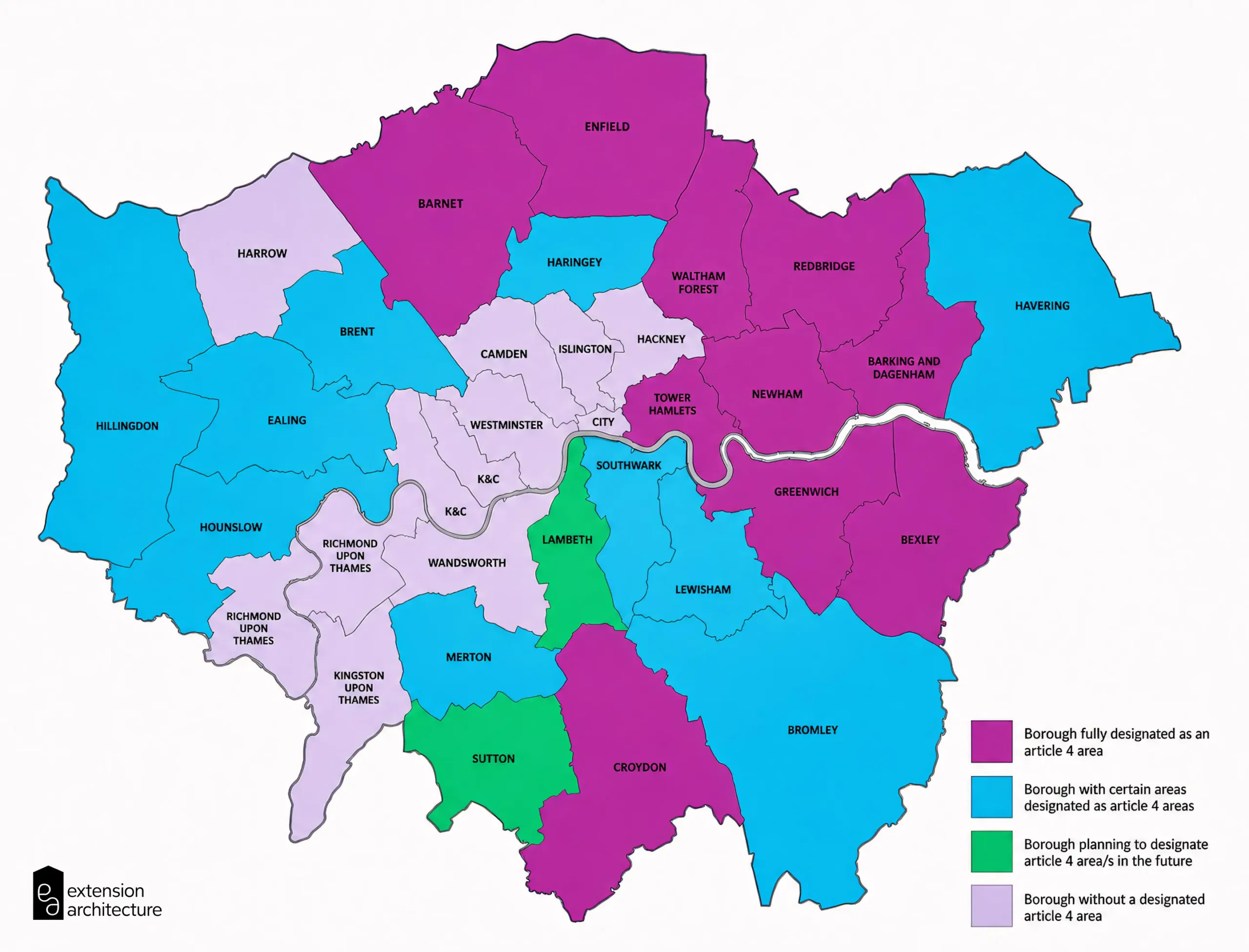
- London. Multiple boroughs including Islington, Southwark, Haringey, and Newham have Article 4 Directions covering parts of their area.
- Leeds. One of the earliest adopters, covering large parts of the inner city and student neighbourhoods.
- Bristol. Introduced to manage HMO growth in areas such as Clifton, Redland, and Bedminster.
- Nottingham. Broad Article 4 coverage across much of the city, particularly around Nottingham Trent University.
- Manchester and Salford. Targeted directions around student accommodation corridors.
- Oxford and Cambridge. University city pressures have led to restrictions in central residential areas.
- Portsmouth and Southampton. Coastal university cities with significant HMO concentrations.
Always check directly with the relevant local planning authority or the council’s interactive planning map. Article 4 boundaries are site specific, and a property one street away may fall outside a designated area.
How to Apply for HMO Planning Permission Under Article 4
If your property sits within an Article 4 area, here is the typical process:
- Pre application research. Confirm the Article 4 boundary applies to your site. Check the council’s online planning map or contact the planning department.
- Pre application advice. Many councils offer a paid pre application advice service. This is strongly recommended before submitting, as it helps identify likely policy objections early.
- Appoint a planning consultant or architect. Prepare a planning statement addressing local HMO policy, housing mix, and any concentration thresholds.
- Submit a full planning application. This includes a completed application form, location and block plans, floor plans, a design and access statement, and a planning statement.
- Determination. The statutory determination period is eight weeks for householder and minor applications. Many councils take longer in practice.
- Conditions. If approved, the permission will typically carry conditions relating to maximum occupancy, bin and cycle storage, and sometimes internal space standards.
- Appeal. If refused, you have the right of appeal to the Planning Inspectorate. Appeal prospects depend heavily on the strength of the council’s policy case and whether their evidence on concentration genuinely supports refusal.

Key Considerations Before Converting a Property to an HMO
Check the Article 4 Boundary First
Do not assume. Confirm whether the site falls within a designated Article 4 area before committing to a purchase or conversion programme.
Understand Local Thresholds
Many councils apply a percentage threshold. For example, no more than 10% of dwellings within a 100 metre radius should be in HMO use. If the threshold is already exceeded, permission is very likely to be refused.
Licensing Requirements Run Alongside Planning
Planning permission and HMO licensing are separate regimes. Most HMOs with five or more occupants require a mandatory licence from the council. Some councils operate additional licensing schemes that capture smaller HMOs. Both must be in place before the property can lawfully operate.
Space Standards Matter
National space standards and local HMO SPDs specify minimum room sizes, kitchen and bathroom provision, and fire safety requirements. A conversion that fails to meet these will face problems at licensing stage even if planning permission is granted.
Permitted Development for Other Works
Converting a property to an HMO may involve structural alterations, loft conversions, or extensions. These works may have their own permitted development rights or may require separate planning permission, depending on the scale and the presence of other designations such as a conservation area or listed building.
Act Before a Direction Comes Into Force
If a council has published an Article 4 Direction but it has not yet taken effect (the notice period is typically 12 months), conversions completed before the effective date retain the benefit of permitted development. Timing the conversion before the direction takes effect is a legitimate strategy, but it requires speed and legal certainty.
Frequently Asked Questions About Article 4 HMO Planning Permission
Do I need planning permission for an HMO in an Article 4 area? Yes. In an Article 4 Direction area, converting a C3 dwelling to a C4 HMO requires a full planning application. Without permission, the conversion is unlawful and the council can take enforcement action.
Can a council refuse HMO planning permission? Yes. Councils can and do refuse on grounds including over concentration of HMOs, loss of family housing, parking impacts, and failure to meet local amenity standards. Refusal rates vary significantly depending on the local authority and the specific location within it.
Does Article 4 apply to all HMOs? No. Article 4 Directions specifically target the C3 to C4 change of use, covering small HMOs with up to six unrelated occupants. Larger HMOs (seven or more occupants, sui generis use) always require planning permission regardless of Article 4.
Will my existing HMO be affected if a new Article 4 Direction is introduced? No. If your property was lawfully operating as an HMO before the Article 4 Direction took effect, the existing use is protected. You do not need to apply for retrospective permission. The direction only affects future conversions.
How long does HMO planning permission take? The statutory period is eight weeks, though many councils take longer. In complex cases or where pre application advice is sought first, the total process from initial advice to decision can take four to six months.
Can I appeal a refused HMO planning application? Yes. You have the right to appeal to the Planning Inspectorate. Appeals are decided on planning merits. If the council’s policy is poorly evidenced, or if the concentration threshold is not genuinely exceeded, an appeal can succeed. Instructing an experienced planning consultant to manage the appeal significantly improves prospects.
Extension Architecture is a London based architectural practice specialising in planning applications, HMO conversions, and permitted development advice across Greater London and the South East. If you need clarity on whether your property falls within an Article 4 area, or you want to understand your planning options before committing to a conversion, get in touch with our team.