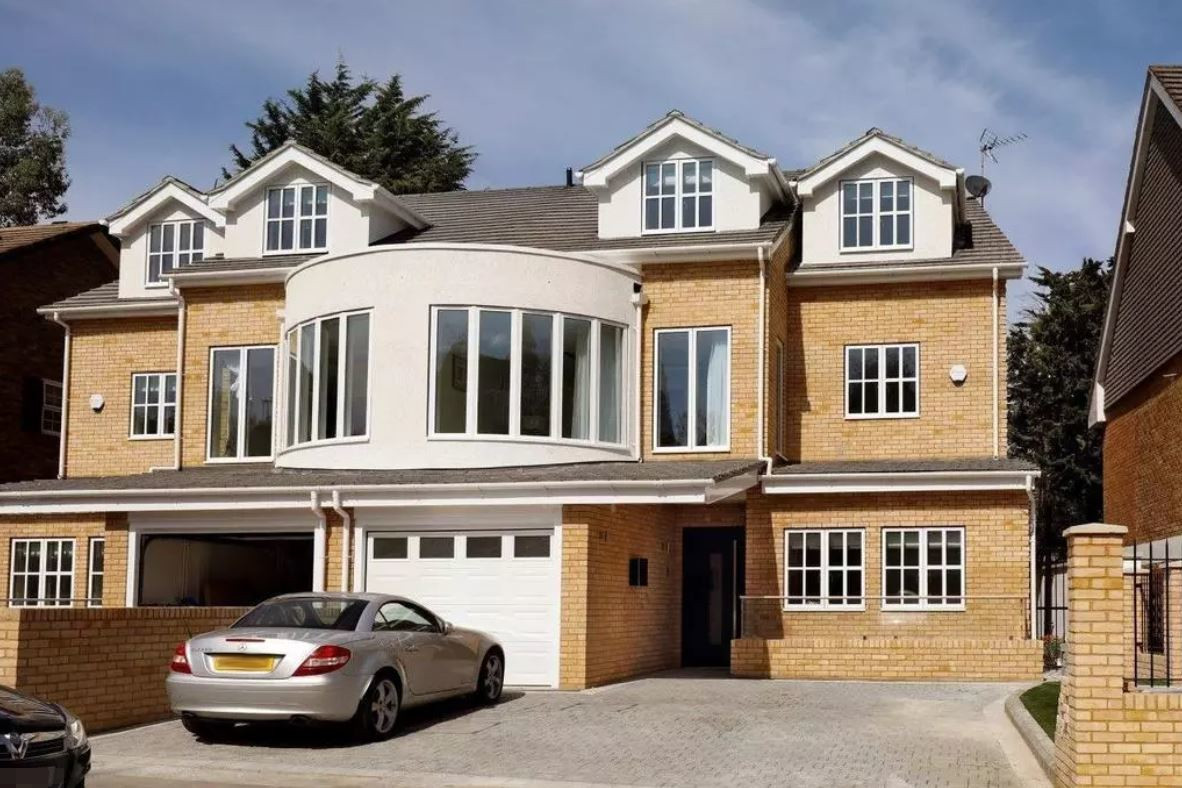
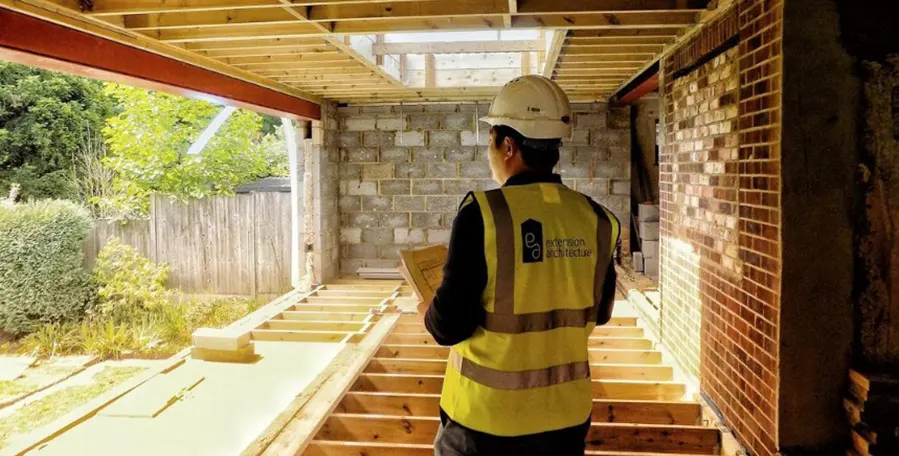
Getting started with small scale property development in the UK
Small scale property development can look scary from the outside. Lots of numbers, legal stuff, builders, banks. But once you break it into clear steps, it becomes a normal business project that many people can do. You do not need to be a builder. You just need a clear plan, the right team and some patience.
Key Insights at a Glance
Small scale property development usually means turning one building or one plot into a small number of new homes, often between five and twenty units.
Your main job is to act like a small business owner, not to do the drawings or the building work yourself.
Most people use a mix of their own money, private investors and development finance, so you often need less cash than you first think.
A clear plan for planning permission or permitted development rights will reduce delays and a lot of stress later.
Working with an experienced architect such as Extension Architecture can help you check if a site really has potential before you commit to buy it.
You should always check that the numbers work on paper, with a target profit on cost, before you even think about making an offer.
What small scale property development really means
Small scale development is about changing how a building is used so that it becomes more valuable. For example, turning an empty shop into a few flats, or converting a tired office into homes that people actually want to live in.
You are not trying to be a big housebuilder. You sit in a space where projects are too big for most small builders but too small for large developers to bother with. That gap can be very profitable if you stay disciplined.
Simple steps to plan your first project
The best way to begin is to pick one clear strategy instead of trying everything at once. That might be:
Convert a small commercial building into flats.
Split a house into self contained flats.
Buy a building with good planning potential and add more units at the back or on top.
Then think through four things:
Area: Pick a location you know. You want to understand who lives there, what they rent, what they buy, and how fast homes sell.
Budget: Work out a rough maximum total project cost you feel comfortable with. Remember that you will not pay all of it yourself if you use finance.
Profit target: Many developers aim for at least twenty percent profit on total cost for a small scheme. This gives a buffer if costs creep up or sales are a bit slow.
Time: Ask yourself if you can commit the time to visit the site, speak with professionals and make decisions. It is not a passive thing. You have to be present.
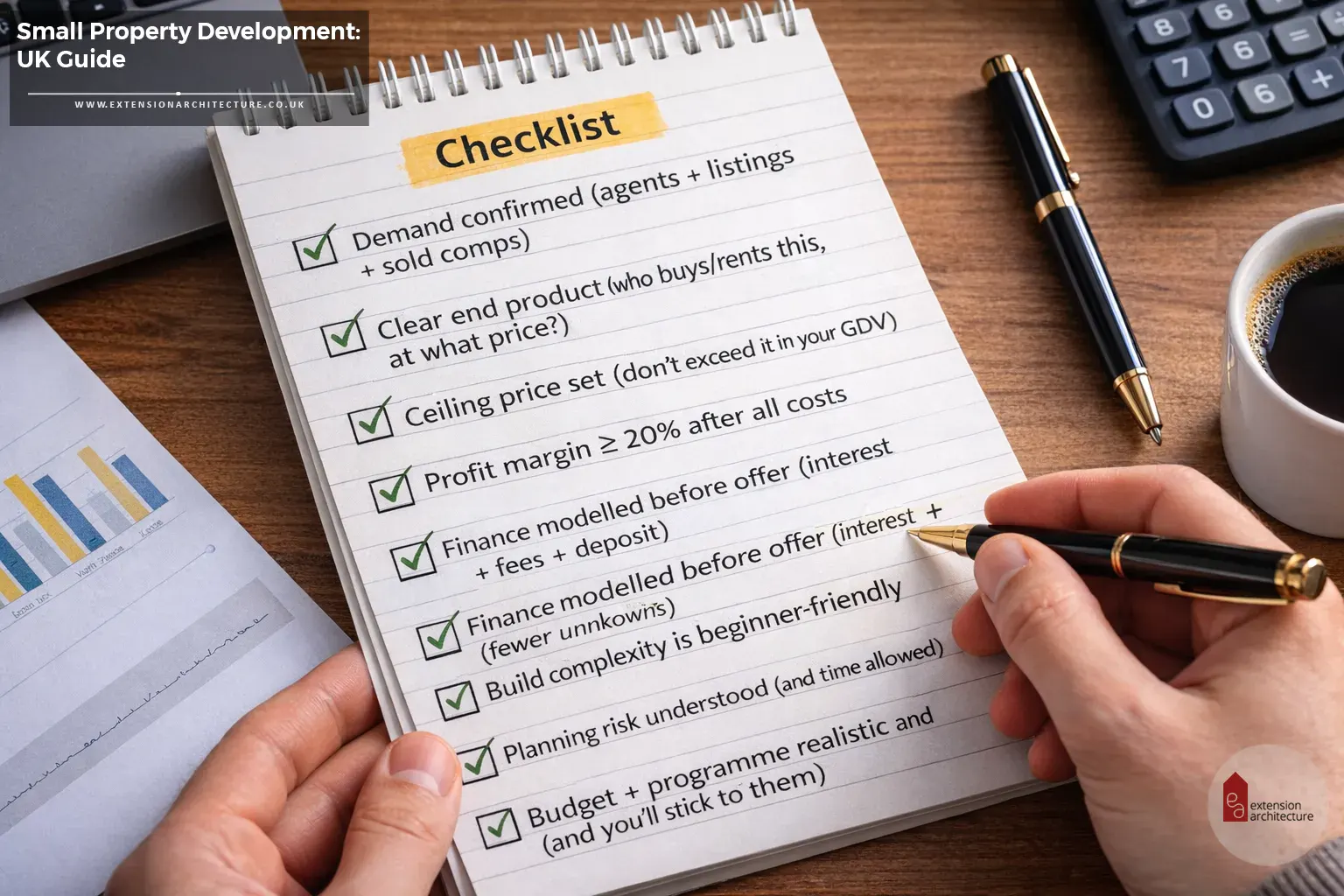
Use this checklist to compare properties quickly:
Demand confirmed (agents + listings + sold comps)
Clear end product (who buys/rents this, at what price?)
Ceiling price set (don’t exceed it in your GDV)
Profit margin ≥ 20% after all costs
Finance modelled before offer (interest + fees + deposit)
Build complexity is beginner-friendly (fewer unknowns)
Planning risk understood (and time allowed)
Budget + programme realistic (and you’ll stick to them)
Money and finance for beginner developers
The big fear for most people is money. The truth is, you normally do not pay for everything yourself.
Typical funding on a small scheme might include:
Your own funds This might cover some of the deposit and early fees like surveys, legal work and architect costs.
Private investors These can be friends, family or business contacts. They provide part of the deposit or working capital in return for a fixed interest or a share of profit.
Development finance A specialist lender pays a large part of the purchase price and then releases build funds in stages as the work is checked and signed off. You pay interest on the money for the time you use it.
Good brokers can help match your project to the right lender. Still, the deal must make sense. If the purchase price and build cost are too high compared to the final value, finance will be hard and you should probably walk away.
Choosing the right team for your project
You do not build a project like this alone. The skill is to pick and manage a strong team.
Key people normally are:
Architect: They prepare drawings, test layouts, and help you see what is possible on a site. A London based practice like Extension Architecture can also help with design ideas that respect planning rules and still give good usable space.
Planning consultant: Sometimes your architect covers this. On trickier schemes, a separate planner can advise how likely approval is and what changes give you a better chance.
Structural engineer: They make sure the building stands up and that any new walls, openings or floors are safe.
Cost consultant or experienced contractor: They help you understand realistic build costs. Many new developers get hurt here because they guess and the guess is wrong.
Solicitor and broker: Your solicitor checks title, any restrictions and legal risk. Your broker works on funding and keeps in touch with lenders during the project.
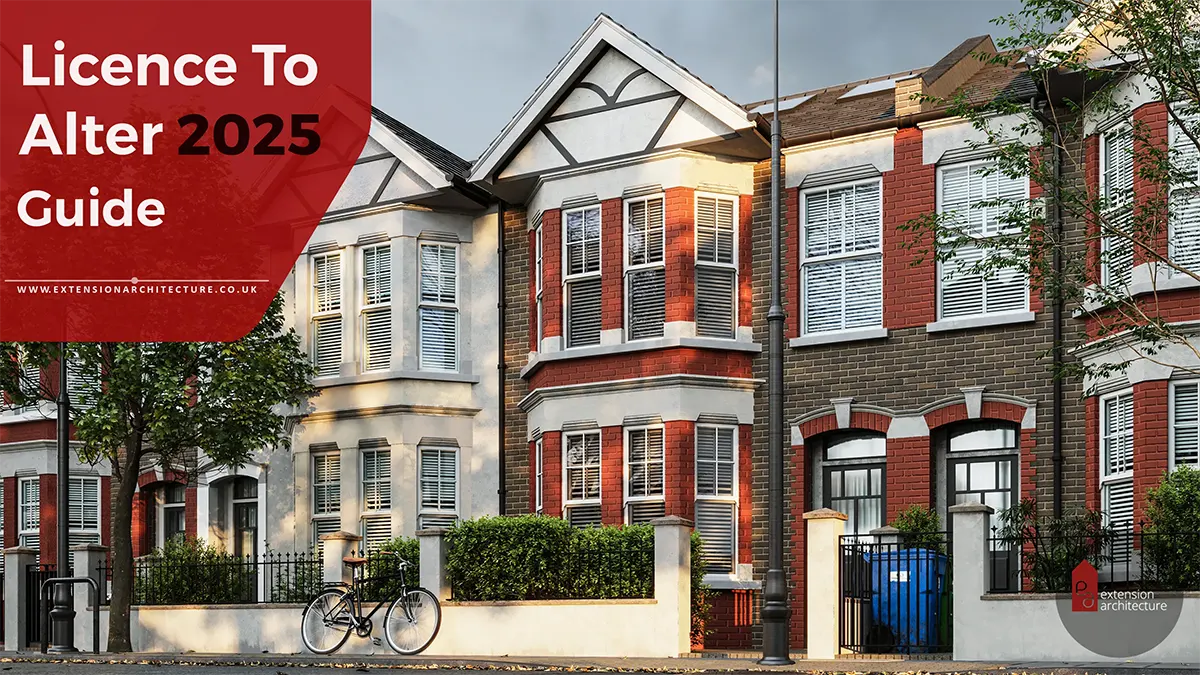
At Extension Architecture, we’re well placed to advise on and support Licence to Alter applications from start to finish. We have in-house Planning Specialists, Structural Engineer, Project Managers and Contractors, who understand how planning considerations and building control requirements overlap, and we manage the process in a way that reduces delays and back-and-forth with all the parties involved. We are used to preparing the right drawings, specs and supporting documents to secure consent efficiently and protect you throughout the whole process.
How to reduce planning and construction risk
Risk kills confidence. You cannot remove all risk but you can reduce it.
Planning and permission
Check at an early stage:
Does the building fall under any permitted development rights that let you convert without full planning permission.
Is it in a conservation area or near any protected buildings.
What the local plan says about use of that street or block.
An architect who deals with London boroughs often, such as Extension Architecture, can look at a site and tell you quickly if there are big obstacles. Getting this view before you exchange contracts can save you a lot of more later.
Construction and cost
To keep construction risk lower:
Get at least two independent build cost opinions before you buy.
Use a proper building contract with clear scope and payment stages.
Keep a contingency, maybe ten to fifteen percent of build cost, for surprises.
There is always a surprise. Old pipes, poor ground, hidden damage behind walls. If you prepare for some of this, you sleep better.
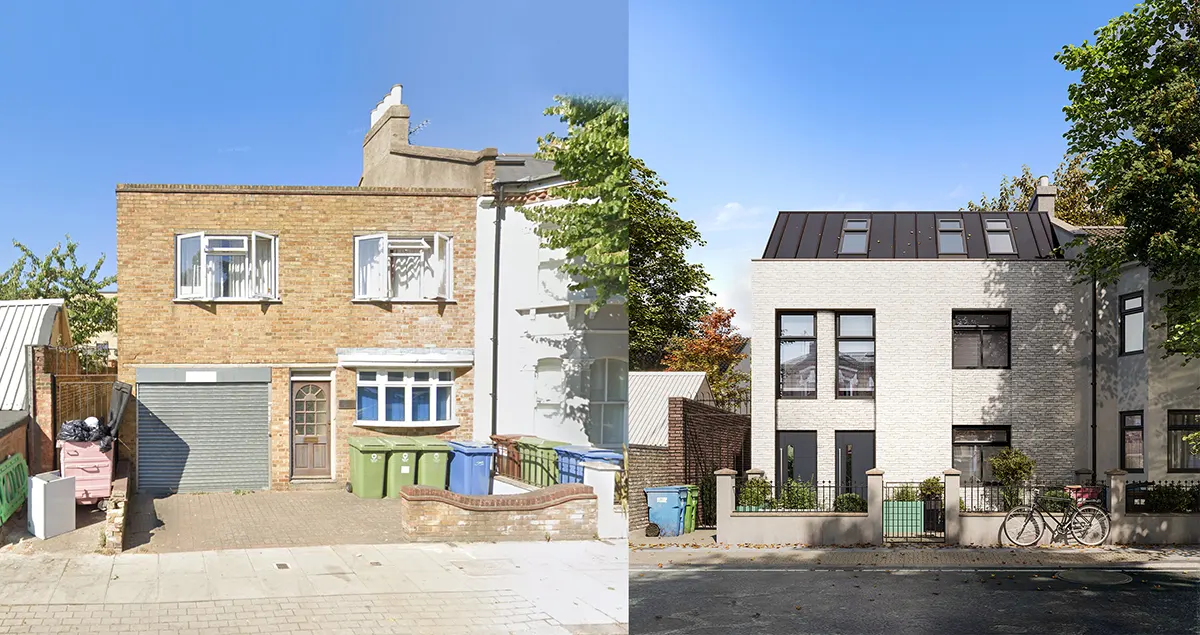
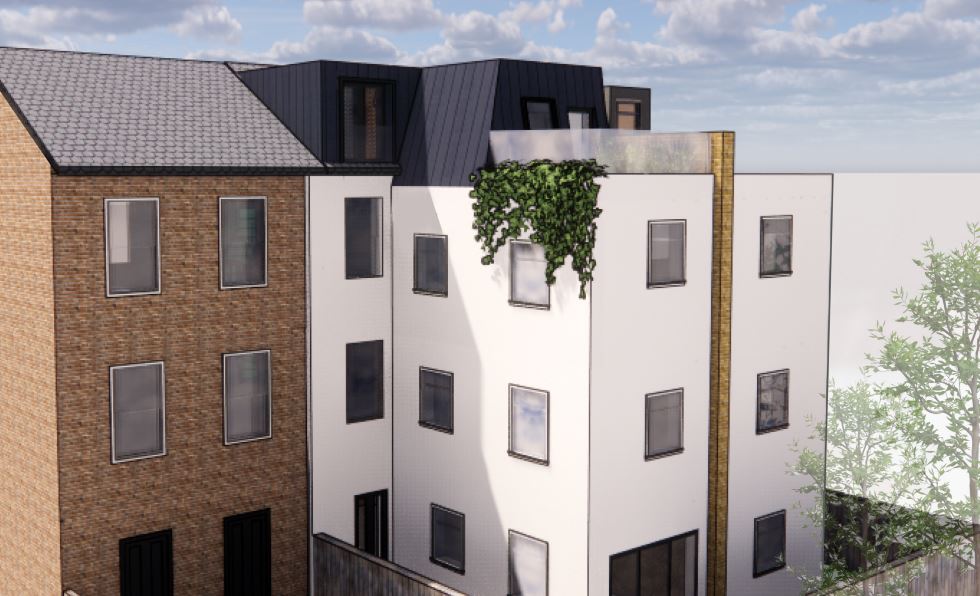
Case Study: Clapham Common, London.
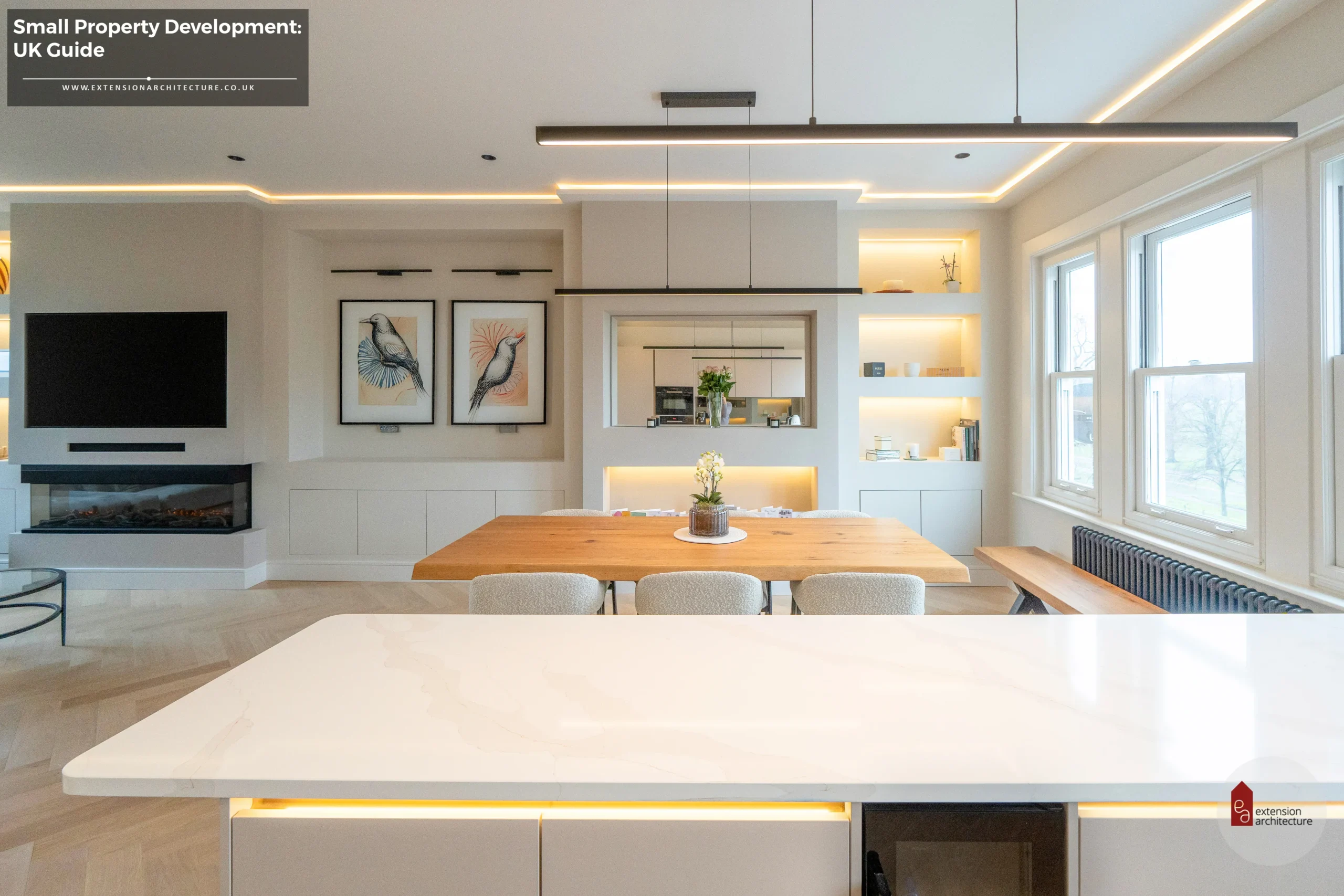
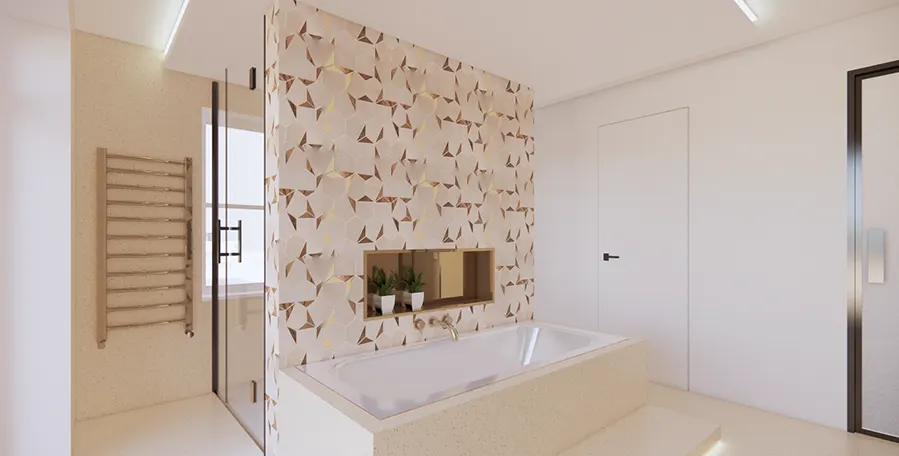
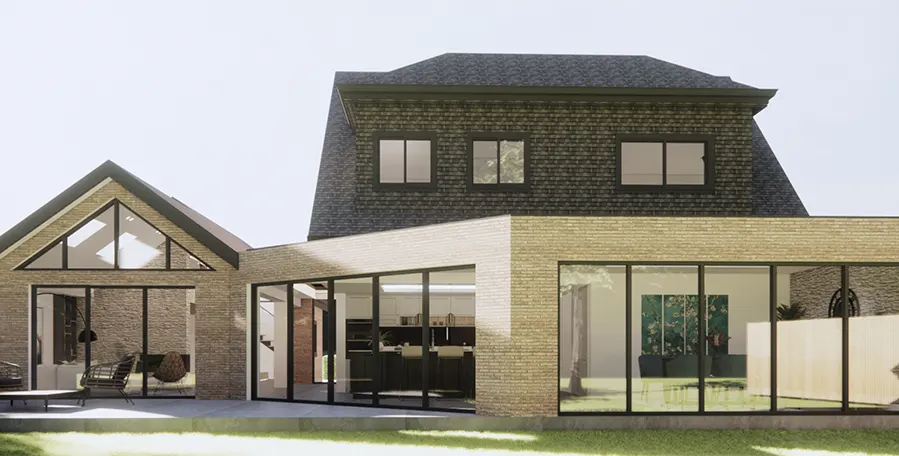
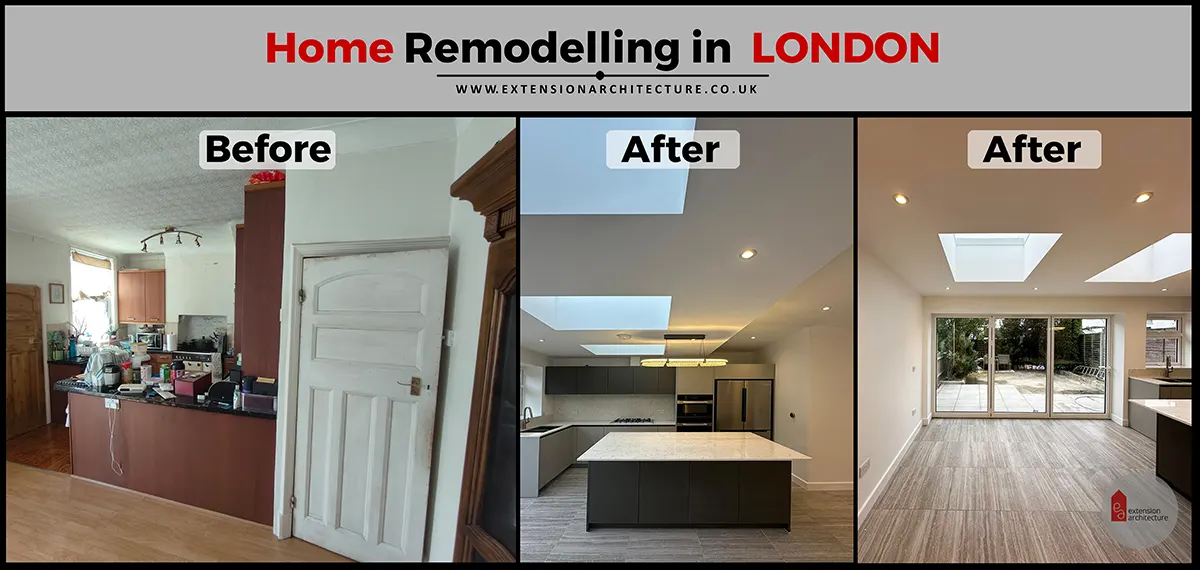
Extension Architecture supported a first-time small property developer to turn a cramped, dated home into a brighter, higher-value layout with clear buyer/renter appeal.
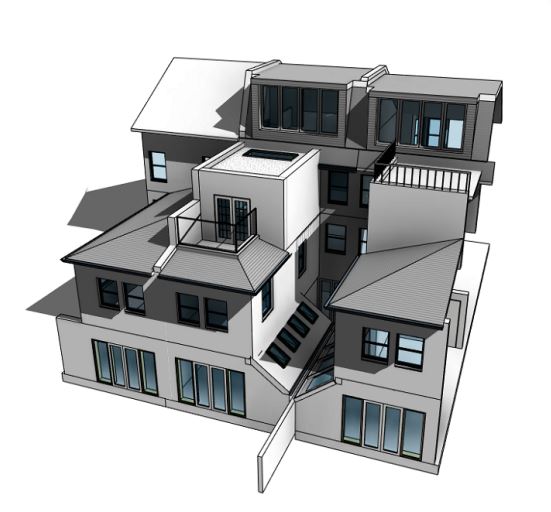
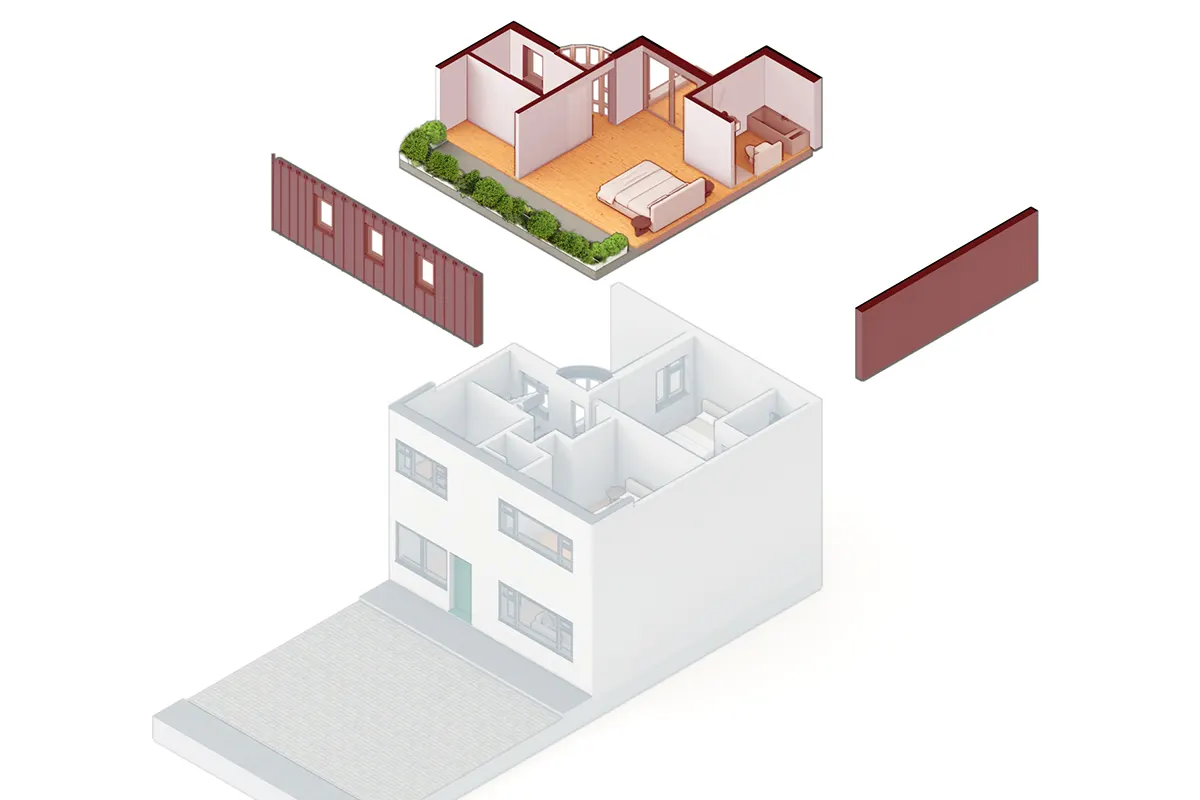
The existing plan had a narrow kitchen and separated rooms that blocked light and limited how the space could be used. Our first priority was to unlock the layout: we removed two key internal walls and replanned the floor to create a large L-shaped open-plan living area. This improved flow and allowed daylight from the south-facing side to travel through and connect with the north-facing window, making the main space feel much larger and lighter.
Downstairs, we tackled two issues that were dragging the property down: a low-pitch roof over the second bedroom and a very small, outdated bathroom. We stripped back this level and levelled the roof to form a terrace above adding valuable outdoor space while also enabling higher, flat ceilings below to improve the sense of volume in the rooms.
Because the client was new to developments at this scale, we used an iterative design process to test multiple layouts before locking in the final arrangement. We also recommended a project manager for smoother site coordination, builder liaison, and day-to-day decision support, which reduced risk and kept the project moving.
When to work with Extension Architecture
For a London based project, involving Extension Architecture early usually makes the whole process smoother. They can:
Visit the building and prepare a measured survey.
Draw up several layout options so you can see different numbers of units and test what makes most sense.
Advise on likely planning approach, or if a permitted development route is realistic.
Prepare drawings and documents for planning or prior approval.
Produce technical drawings that the builder and lender will both need.
You can then focus on the business side of the deal while the technical side is handled by people who do this work every week.
Frequently Asked Questions about Property Development
Do I need a lot of money to start small scale property development
You usually need some savings, but not the full project cost. Many beginners combine their own cash with private investors and development finance. The key is that the project must show a clear profit on paper, or lenders and investors will say no.
Can I keep my job while I do my first project
Many people keep their main job and run a small development on the side, at least for the first one. You need enough time for site visits, calls and meetings though, so it can feel quite busy for a while.
Do I always need planning permission
Not always. Some conversions can use permitted development rights, which use a lighter process called prior approval. You still need drawings and reports, and the council can still refuse if the design creates poor quality homes.
How long does a small development take
A simple conversion can sometimes complete in about twelve to eighteen months from purchase to sale or refinance. More complex projects can take two years or more, especially if planning is slow or there is heavy structural work.
Is it better to sell the new homes or keep them and rent them out
There is no single right answer. Selling gives you a lump sum profit you can use for the next project or other plans. Keeping the units and refinancing can give you long term income and rising capital value, but you carry more debt and management work.
Eugene Kim, Founder and Managing Director of Extension Architecture, has led the firm for over 14 years, consistently delivering quality solutions. His dedication has been key to the company's growth and success.