Best Kitchen Flooring Ideas in the UK: Durable & Stylish Options
In this article, let’s discuss kitchen flooring ideas as we delve into the details regarding the types of kitchen flooring, and what kind of flooring should you go for by considering how your kitchen is spaced and utilised.

In Brief
- Some materials like vinyl and porcelain are extremely durable, water-resistant, and offer low maintenance.
- Flooring can set the tone for your entire kitchen. Sleek tiles, warm wood, or rustic stone can make your kitchen feel an airy and warm space.
- Luxury Vinyl tiles and Porcelain tiles are soft on foot and are also good at colder temperatures.
- Hardwood tiles, especially engineered wood or oak need to be sealed properly to take complete advantage.
- Natural stones like slate, granite, and limestone can be great with underfloor heating.
If you are looking for tailored recommendations based on your specific kitchen setup or your personal needs let us know and avail a free quotation from our experts!
Kitchens are one of the busiest areas of a home. Apart from being those areas that gain high foot traffic, they are also prone to frequent utensil drops, food spills and splashes. These factors endanger kitchen floors to get really messy and at most times making them vulnerable to cracks and breakage too. Hence the point of choosing the right kitchen flooring.
So, how many boxes should a kitchen flooring tick? How to select the right kitchen flooring for your home? Should one look for durability or style? Or can we have both in one? The questions are many, and the good news is, there are several options that ticks all the boxes you want.
Before we discuss ideas for kitchen flooring, you need to know that kitchen floors in general should be both durable and easy to maintain, apart from being stylish, regardless of the interior style of your kitchen. They need to demonstrate enough resilience so as to handle the daily wear and tear the kitchen area undergoes whilst still exhibiting their original aesthetic form and style.
Let’s now take a look at the best kitchen flooring options available that can offer high durability, function, and style, so that you can make the right choice for your home –
Kitchen Floor Ideas: Best Flooring Options for UK Homes
The best kitchen flooring depends on a number of factors. It may include the style you desire, budget, and the level of maintenance you are looking at. It is hence crucial to spend quality time to ponder over and consider the best type of flooring for your kitchen –
1. Vinyl Tiles
Vinyl tiles may be the first thing that should hit you when you think of toughness and longevity. Apart from being resilient, they offer high resistance to water, not just from the top, but also from its backing layer and thus protects the underneath area of your kitchen floors.
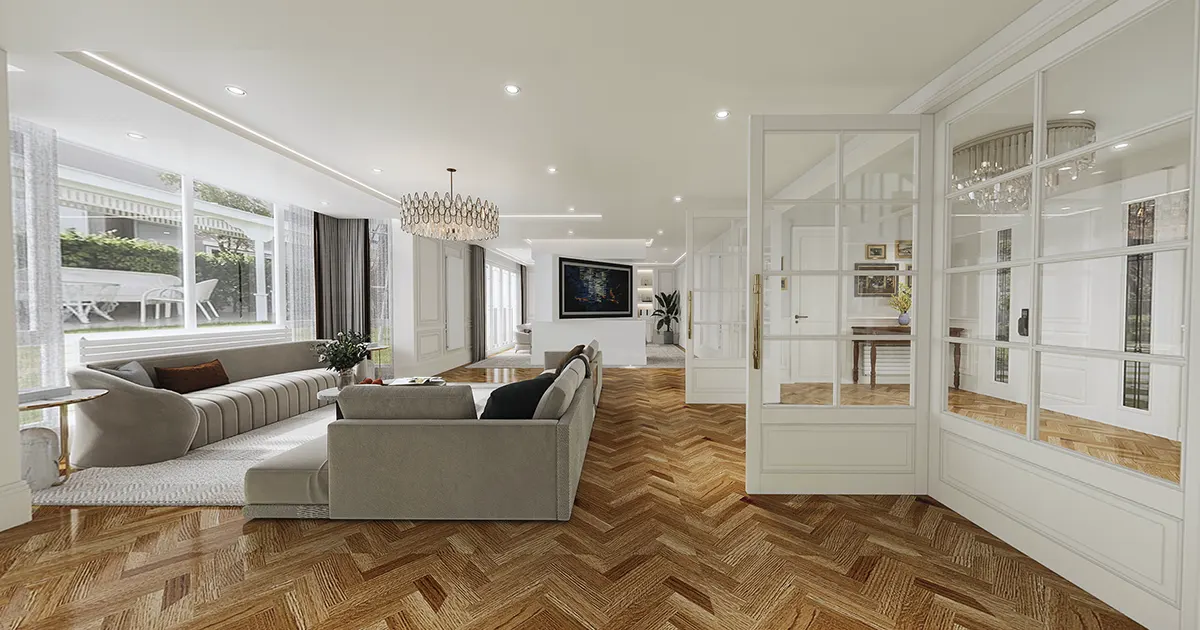
These budget-friendly tiles can be styled to mimic natural materials like wood, stone, and can also be patterned to mimic herringbone or any geometric style to depict a high-end look.
Considerations: Can show scratches or discoloration after a prolonged use, especially after exposure to sunlight or continuous wear.
2. Porcelain Tiles
Porcelain tiles are fired at high temperatures and thus are toughened to become denser and harder, making them ideal for areas that experience high foot traffic, falling utensils, and areas prone to mess.
Porcelain tiles offer great scratch resistance, probably more than vinyl, and are stain resistant to an extent that won’t penetrate the surface. So, any greasy or oily stains can be easily handled and managed. They can be safely used near ovens and cooktops as they exhibit great fire and heat resistance.
In terms of the style, porcelain tiles come in endless finishes, from wood-look planks, marble-look slabs, geometric patterns, terrazzo styles, matte or gloss, and can be designed to achieve modern, rustic, industrial, and classic looks.
Considerations: Make sure you do periodic cleaning and not let dirt or dust accumulate on the floor which can happen with grout lines.
3. Hardwood Flooring
When it comes to hardwood flooring, tiles made of engineered wood can be a great choice as they not only offer a timeless aesthetic appeal and elegance, but they are also great at resisting warping, expanding, and contracting especially when properly sealed. This is crucial in kitchens where heat and moisture levels fluctuate.
Engineered wood are embedded with modern sealants which helps in resisting daily wear & tear, spills, and cleaning.
Wood-effect porcelain tiles come in weathered oak, smoked and charred wood styles and offer resistance to scratch, stain, and moisture too.
Oak, Maplewood, and Walnut can all be elegant options as these add warmth and character.
Considerations: Improperly sealed hardwood flooring will be highly vulnerable to moisture. Maintenance will be a challenge over time, if your kitchen gains high foot traffic.
4. Polished Concrete
Polished concrete combines industrial aesthetics with high durability and low maintenance. If you are a fan of the minimalist, then these tiles can be the choice.
Concrete is one of the hardest, and most resilient surfaces which can be ideal for kitchens that experience daily wear & tear. They are relatively easy to clean and require routine sweeping and occasional mopping. They can be perfect for open plan layouts and modern interiors as they can offer a sleek, minimalist and continuous finish. They can also be ideal if your plan is to install underfloor heating systems.
Considerations: Although polished concrete is durable, they still need to be sealed properly if otherwise they can be susceptible to staining or damage.
5. Natural Stone
Natural stones like marble, granite can be highly durable and offer unmatched luxury and elegance. They come in various patterns and colours and can last for decades when maintained properly.
Slate usually comes in dark, earthy hues and can be perfect for rustic or industrial kitchens.
Limestone come across as soft, pale, and elegant designs and work well for classic designed kitchens.
6. Terrazzo Tiles
Terrazzo add that trendiness of colour flecks embedded in cement. They are manufactured to be hard-worn and are dense and hence can resist moisture whilst also having the ability to be resilient to spills and damage from hard drops. They can be great for minimalist kitchens as they add a distinct feature with their patterns as floor tiles.
What Is the Best Flooring for Kitchens in the UK?
Choosing the right kitchen flooring in the UK is an important consideration, and there are several reasons to it. Firstly, the UK has a damp, variable climate with frequent rain and high humidity. In addition, underfloor heating is quite common in the UK, and not all flooring types suit underfloor heating. Another important feature about kitchens in the UK is they often have open plan layouts with diners, and choosing flooring that suits the layout is key.
So, choosing flooring depends on what your priorities are, and how is your home and kitchen space built and shaped.
Let’s look at a few flooring options stating their ideal usage, benefits, and purpose.
1. Luxury Vinyl Tile (LVT)
Pros: Waterproof, affordable, soft underfoot, and stylish.
Ideal for: Busy families, modern kitchens.
Benefits:
- Compatible with underfloor heating
- Available in realistic wood or stone finishes
- Easy to clean and scratch-resistant
2. Porcelain Tiles – Best for Durability and Style
Pros: Incredibly hardwearing and available in endless styles.
Ideal for: Traditional or contemporary homes, especially with open-plan spaces.
Benefits:
- Water, stain, and heat resistant
- Low maintenance
- Great for high-traffic kitchens
Drawback: Can be cold underfoot (use with underfloor heating or rugs)
3. Engineered Wood – Best for Warmth and Character
Pros: Brings real-wood charm with more stability than solid hardwood.
Ideal for: Modern rustic homes.
Benefits:
- Better suited to UK humidity than solid wood
- Can be sanded and refinished (depending on thickness)
Drawback: Needs proper sealing and may tend to wear when there is standing water.
4. Stone Tiles (Slate or Limestone) – Best for Timeless Elegance
Pros: Durable and adds value with natural charm.
Ideal for: Farmhouse kitchens, luxury interiors, or period properties.
Benefits:
- Extremely durable and hardwearing
- Unique, natural textures
- Great for underfloor heating
Drawback: Requires sealing and regular maintenance.
Kitchen Flooring Options: Pros and Cons
All kitchen flooring options come with their own pros and cons, and understanding these is essential to choosing the right material for your home. Kitchens are high-traffic, high-moisture areas, so your floor needs to perform on many fronts including durability, aesthetics, maintenance, and should offer some comfort and insulation (especially in colder temperatures) too.
1. Luxury Vinyl Tile (LVT)
Pros:
- 100% waterproof (ideal)
- Soft and quiet underfoot
- Wide variety of realistic wood/stone designs
- Easy to clean and maintain
- Suitable for underfloor heating
Cons:
- Can dent under heavy furniture
- Some lower-end products may look less realistic
- Needs flat subfloor for installation
2. Porcelain or Ceramic Tiles
Pros:
- Very durable and scratch-resistant
- Completely waterproof
- Vast range of colours, patterns, and finishes
- Excellent for underfloor heating
Cons:
- Cold and hard underfoot without heating
- Can crack if subfloor isn’t perfectly even
- Grout can stain and requires maintenance
3. Engineered Wood
Pros:
- Real wood look and feel
- More stable than solid hardwood (less prone to warping)
- Warmer than tile or stone
- Can work with underfloor heating (if specified)
Cons:
- Not waterproof (needs proper sealing)
- Can scratch or dent more easily than tile or LVT
- More expensive than vinyl or laminate
4. Laminate Flooring
Pros:
- Budget-friendly and comes with wood-look options
- Scratch and wear resistant
- Easy installation
- Comfortable underfoot
Cons:
- Not all types are waterproof – needs correct grade for kitchens
- Seams can swell if water seeps in
- Feels less premium than LVT or real wood
5. Natural Stone (Slate, Limestone, Travertine, Marble)
Pros:
- Unique, timeless appearance
- Long-lasting and adds value
- Works well with underfloor heating
- Heat and stain resistant (when sealed)
Cons:
- Can be cold and hard underfoot
- Requires regular sealing to prevent staining
- Can be slippery when wet
- High material and installation cost
6. Polished Concrete
Pros:
- Very modern, industrial aesthetic
- Seamless and easy to clean
- Extremely hardwearing
- Great with underfloor heating
Cons:
- Can be very cold and hard without heating
- Prone to hairline cracks over time
- Installation requires expertise and is costly
Design Tips: Matching Kitchen Floors with Cabinets and Walls
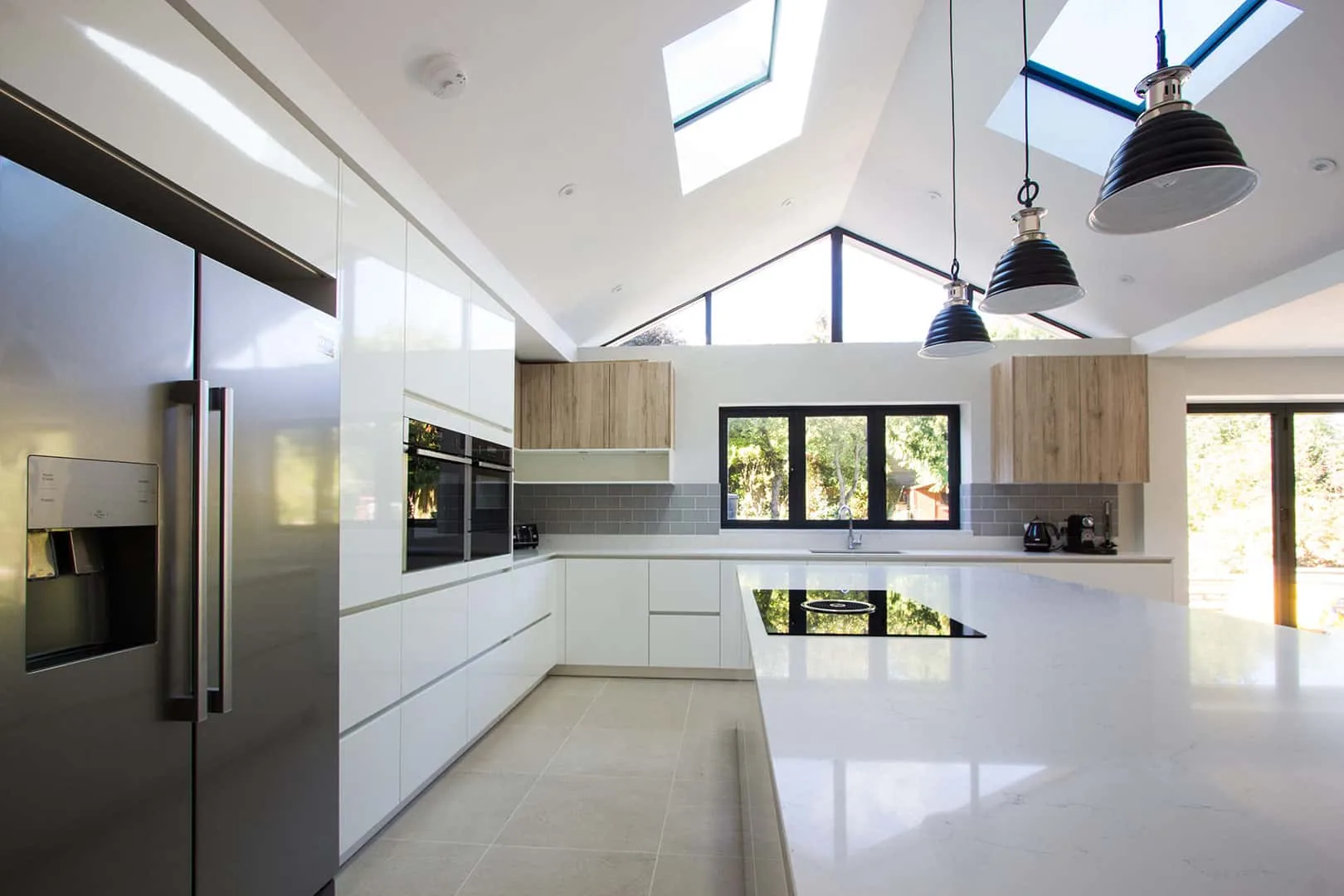
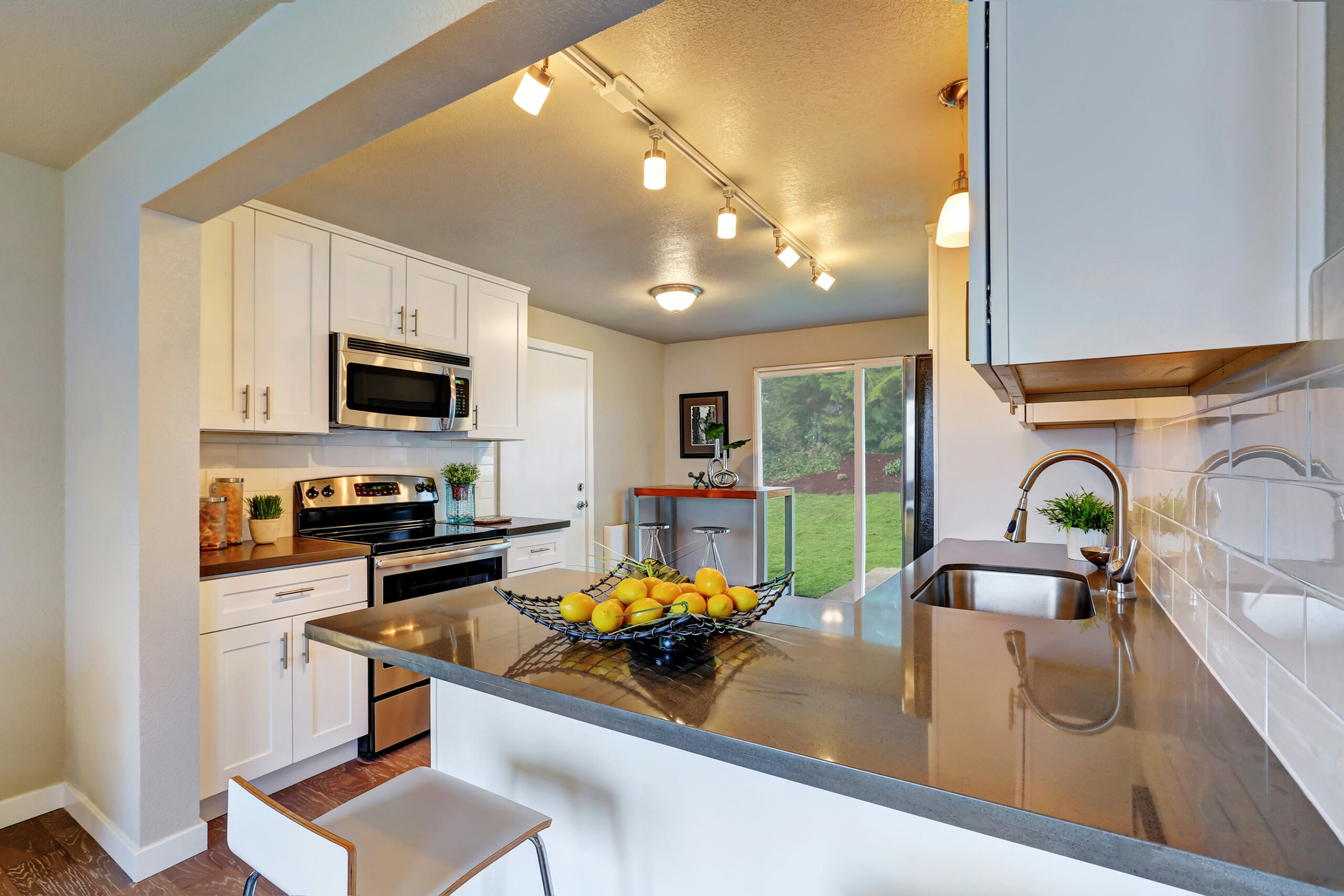
Matching your kitchen flooring, cabinetry, and wall colours is essential for a harmonious and well-designed space. Whether your style is bold and contemporary or warm and rustic, the right combinations can elevate your kitchen’s look and feel. Here’s how you can do it –
1. Balance with Contrast
Pair dark cabinets with lighter floors or walls, and vice-versa, for visual harmony. Contrast keeps the space visually dynamic and avoids overwhelming darkness or monotony.
2. Build a Unified Colour Scheme
Keep your kitchen visually harmonious by choosing a balanced colour palette working around your flooring, cabinets, and walls.
- Choose a grounded base tone flooring.
- Let the cabinets attract and be the focal point. This means colours for your cabinets should be eye-catching. Choose eclectic colours such as flashy yellows, peacock blue for cabinets.
- Paint the walls with accent or neutral colours.
3. Add Textures for Visual Depth
Smooth floors (Vinyl or porcelain) pair well with textured elements. Think of matte finishes, or subtly patterned walls.
For textured flooring (such as slate or concrete), opt for sleek cabinets and simple wall colours to avoid visual overload.
4. Embrace Monochrome for Minimalism
Stick to different shades of a single colour like warm greys, whites, or taupes for a sleek, unified look.
Create depth with varied materials and finishes, such as concrete, wood grain, or matte and gloss contrasts.
5. Pay Attention to Undertones
Just because colours are neutral doesn’t mean they match. For example, beige colour might be warm, grey might be cool.
Make sure your walls, cabinets, and flooring all “speak the same language” by sticking to either warm or cool tones throughout.
6. Neutral Doesn’t Mean Boring
Blend soft shades like linen, greige, and warm wood to make your kitchen feel relaxed yet refined.
It’s a look that never goes out of style—perfect for both cosy country and clean contemporary spaces.
Conclusion
Choosing the right kitchen flooring is more than a design decision. It’s a practical investment in your home’s comfort, durability, and long-term value. With kitchens being one of the busiest and most functional rooms in any household, especially in the UK where climate, foot traffic, and lifestyle play key roles, the right flooring ensures your space stays stylish, easy to maintain, and resilient to daily wear and tear.
Whether you’re after warmth, water resistance, or visual appeal, selecting the right material lays the foundation for a kitchen that not only looks great but works hard for years to come.
At Extension Architecture, we can help you craft the best kitchen outcomes. Whether you have modern, rustic, or sleek liking, our interior design experts can help you from conception to completion.